
Early this morning I watched VRT één’s special news bulletin on the American midterms, with the Associated Press numbers ticking over on a screen behind the presenter. When the bulletin started at 7:00, the Democrats had 206 House seats called. By 7:27 they had 219, one more than the 218 needed. The Democrats have won the House, and with 53 Senate seats called against 41 for the Republicans, they have won the Senate as well.
It is also a rebuke of Donald Trump, who made himself the face of the Republican campaign. I wouldn’t put a final seat count in print until AP has finished its work, so everything below is what was on that screen this morning, plus what I make of it.
The post comes in three parts. The first covers the night itself. The second looks back at the two historical precedents people always reach for, and then imagines the next two years, clearly labelled as fiction. The third explains why I was awake at seven in the morning in the first place.
Contents
Part one: A night worth waking up to
The Senate
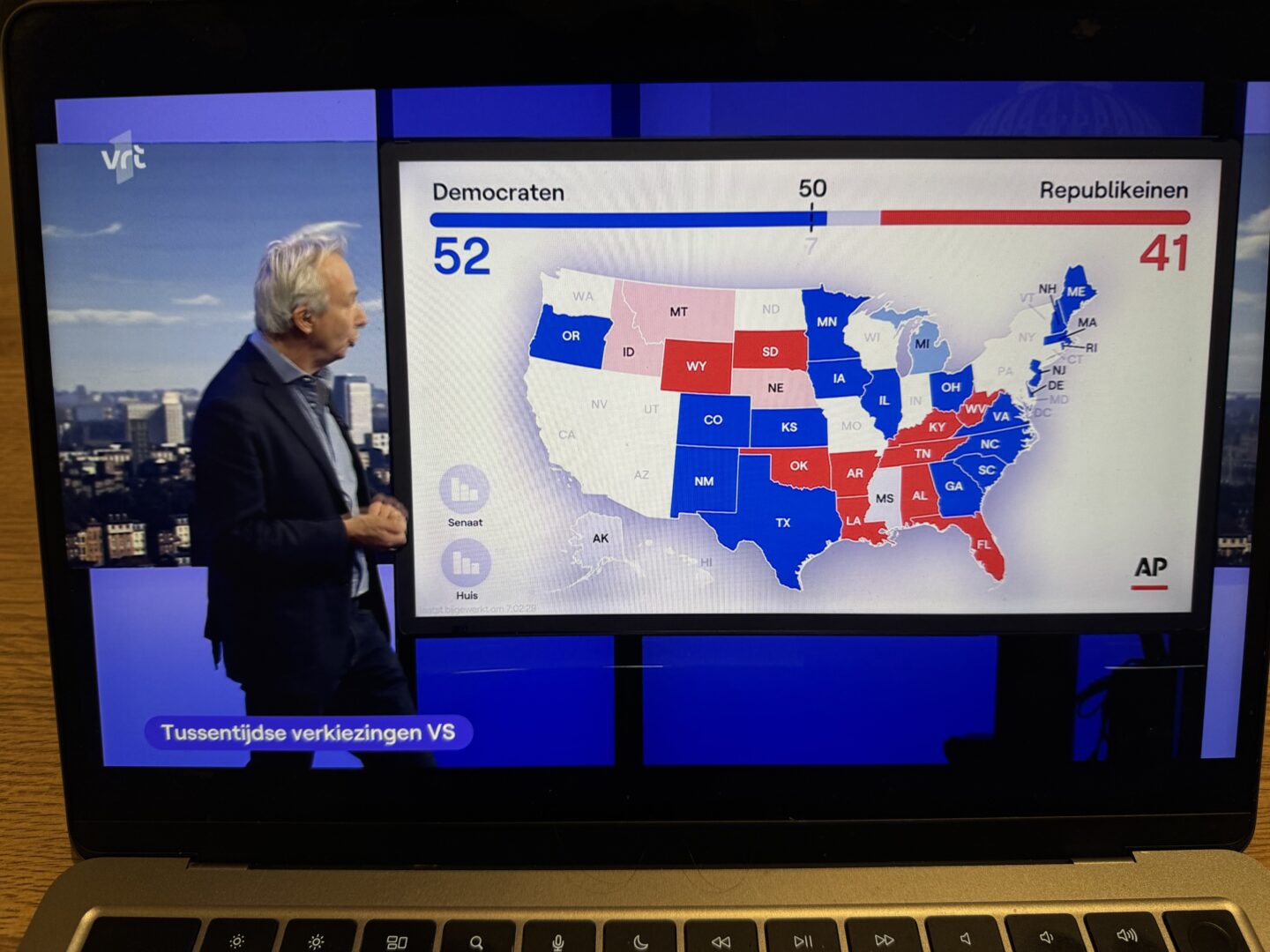
The Senate board at 7:02 showed 52 seats called for the Democrats against 41 for the Republicans, with seven races still open. Republicans came into the night holding 53 of the 100 seats. On the map, Texas, Iowa, Kansas, North Carolina, South Carolina, Ohio and Maine were all coloured Democratic blue, and all seven were Republican seats going into the night. Kansas is the one that made me sit up, because the state had not elected a Democrat to the Senate since 1932. The Methodist pastor Adam Hamilton ending that run is a very long time coming.
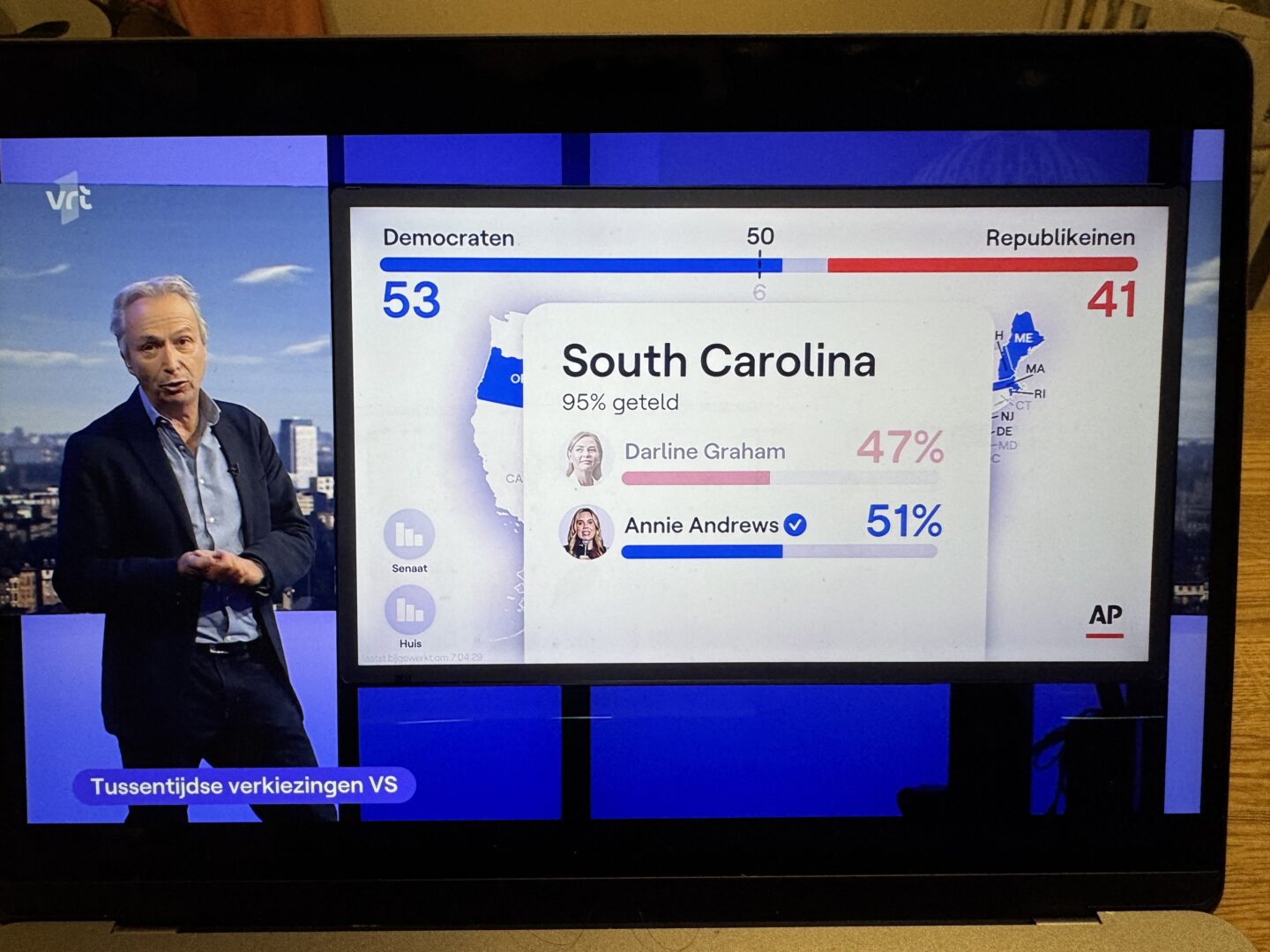
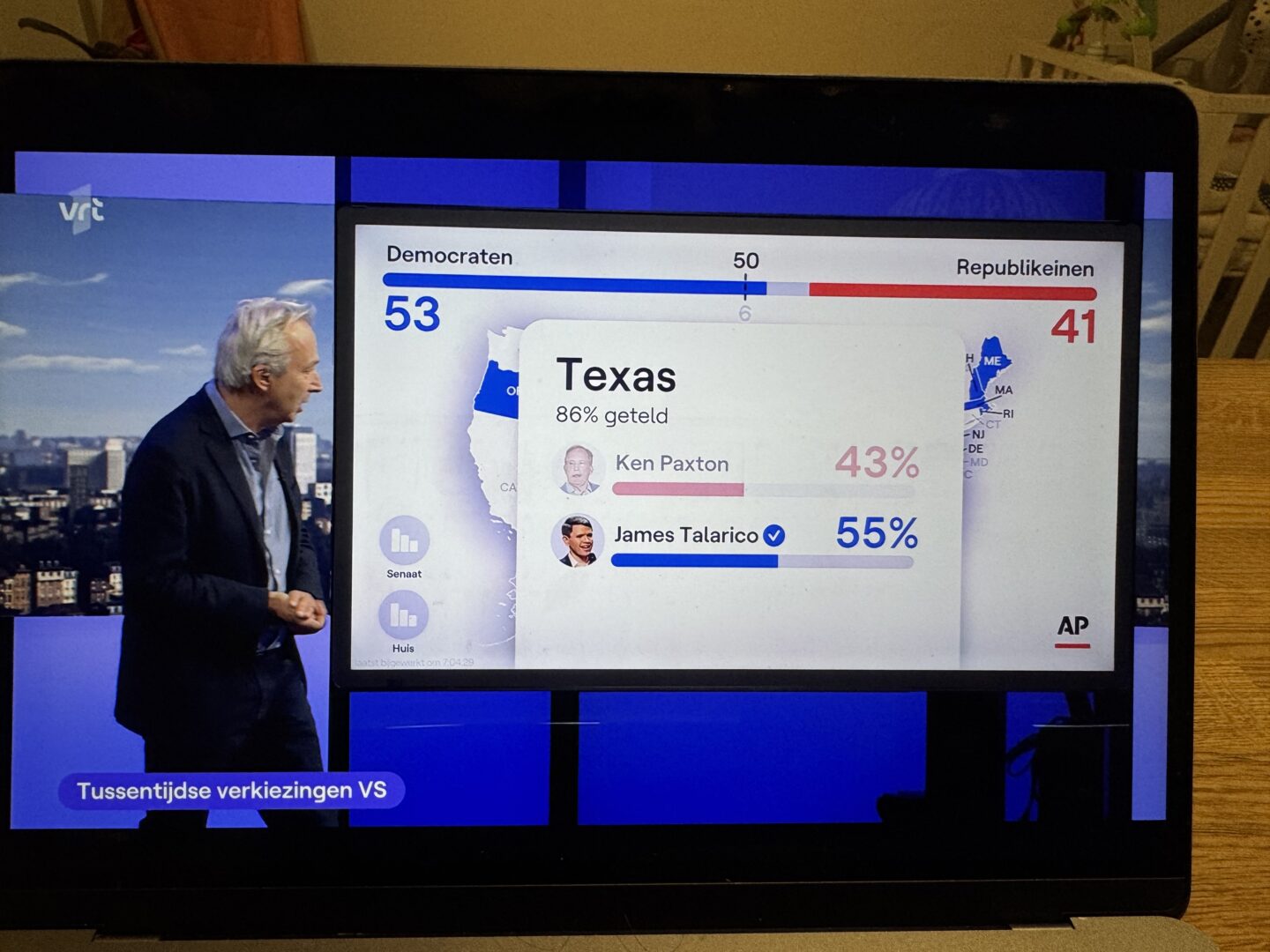
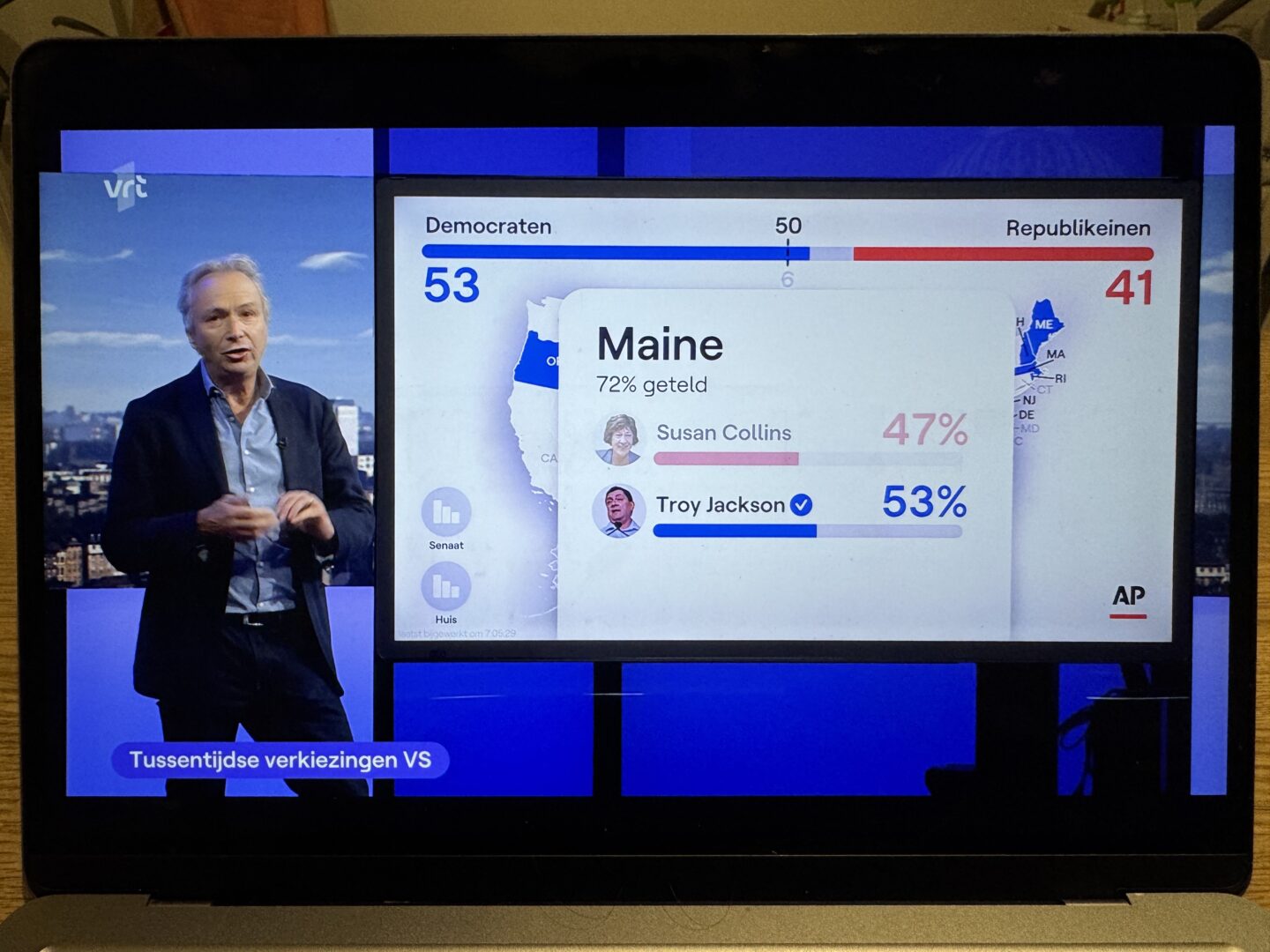
In the minutes after, the screen worked through some of those races one by one. James Talarico beat Ken Paxton in Texas, 55 to 43 percent with 86 percent counted. Annie Andrews beat Darline Graham in South Carolina, 51 to 47 with 95 percent counted. In Maine, Troy Jackson beat Susan Collins, 53 to 47 with 72 percent counted, and AP had already given him its check mark. By 7:04 the Senate tally stood at 53 to 41.
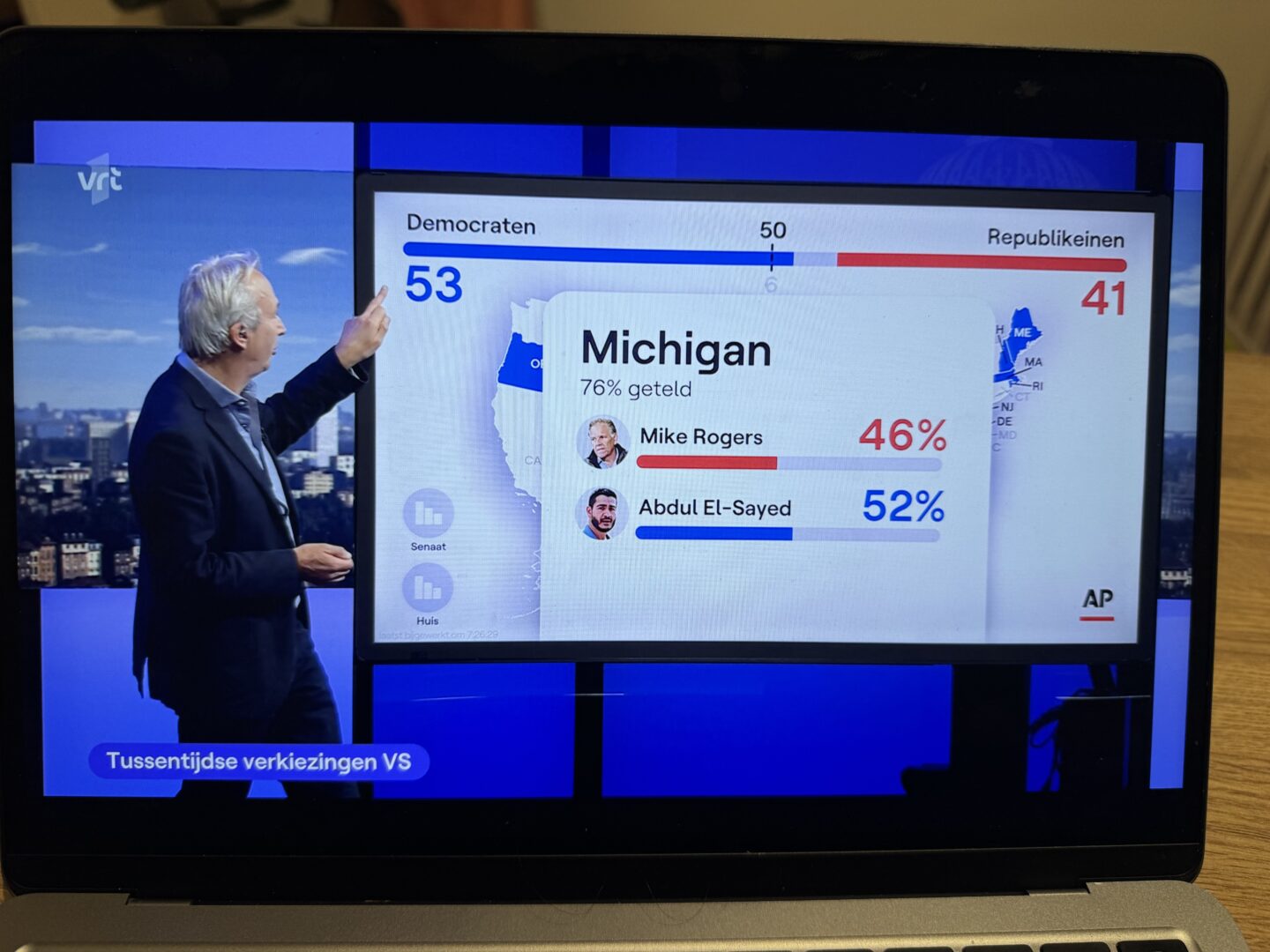
One race was still open at 7:26. In Michigan, Abdul El-Sayed led Mike Rogers 52 to 46 percent with 76 percent counted, but without the check mark. A majority needs 51 seats, so the Senate has changed hands even if every open race goes to the Republicans.
The House
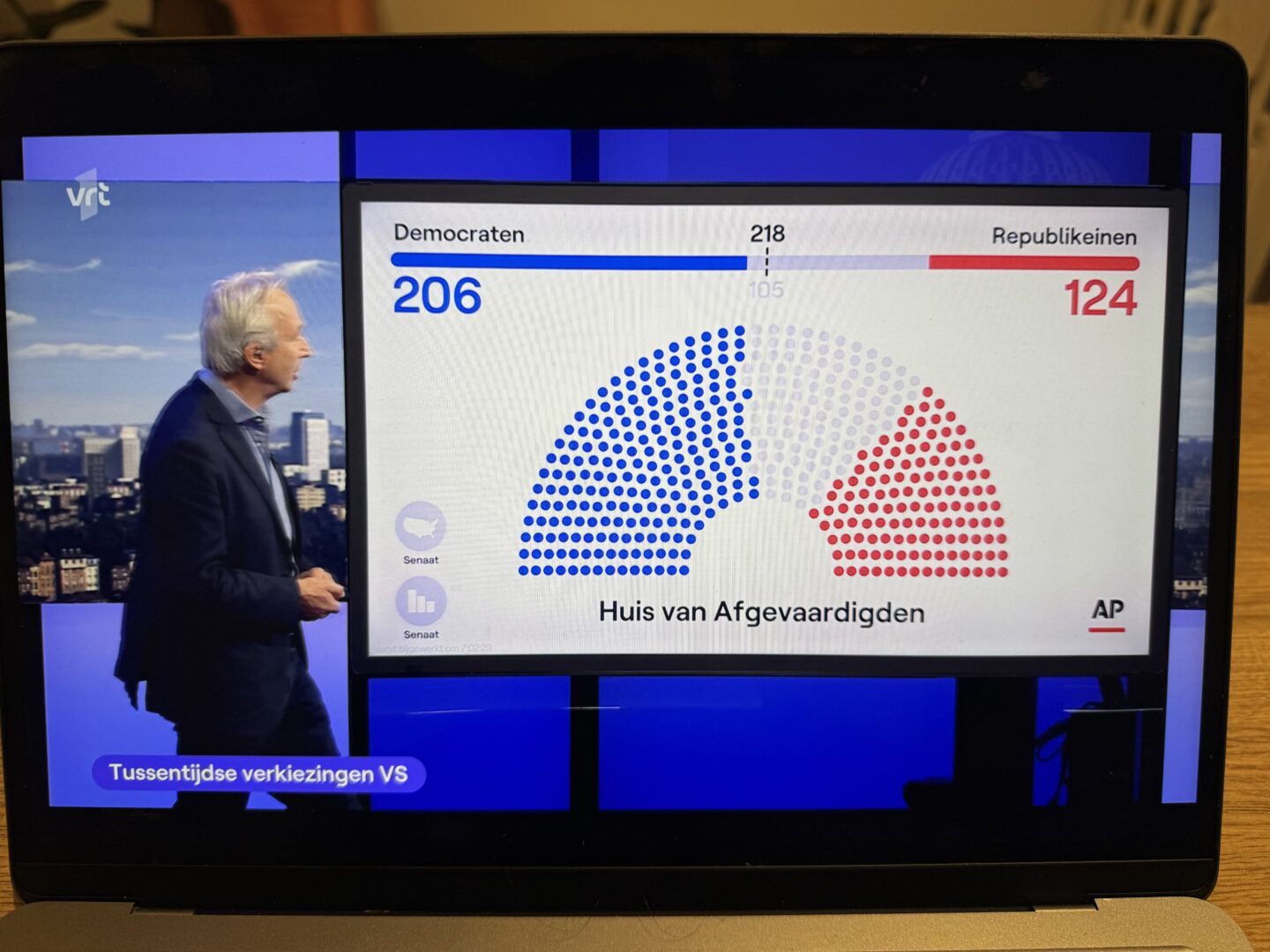
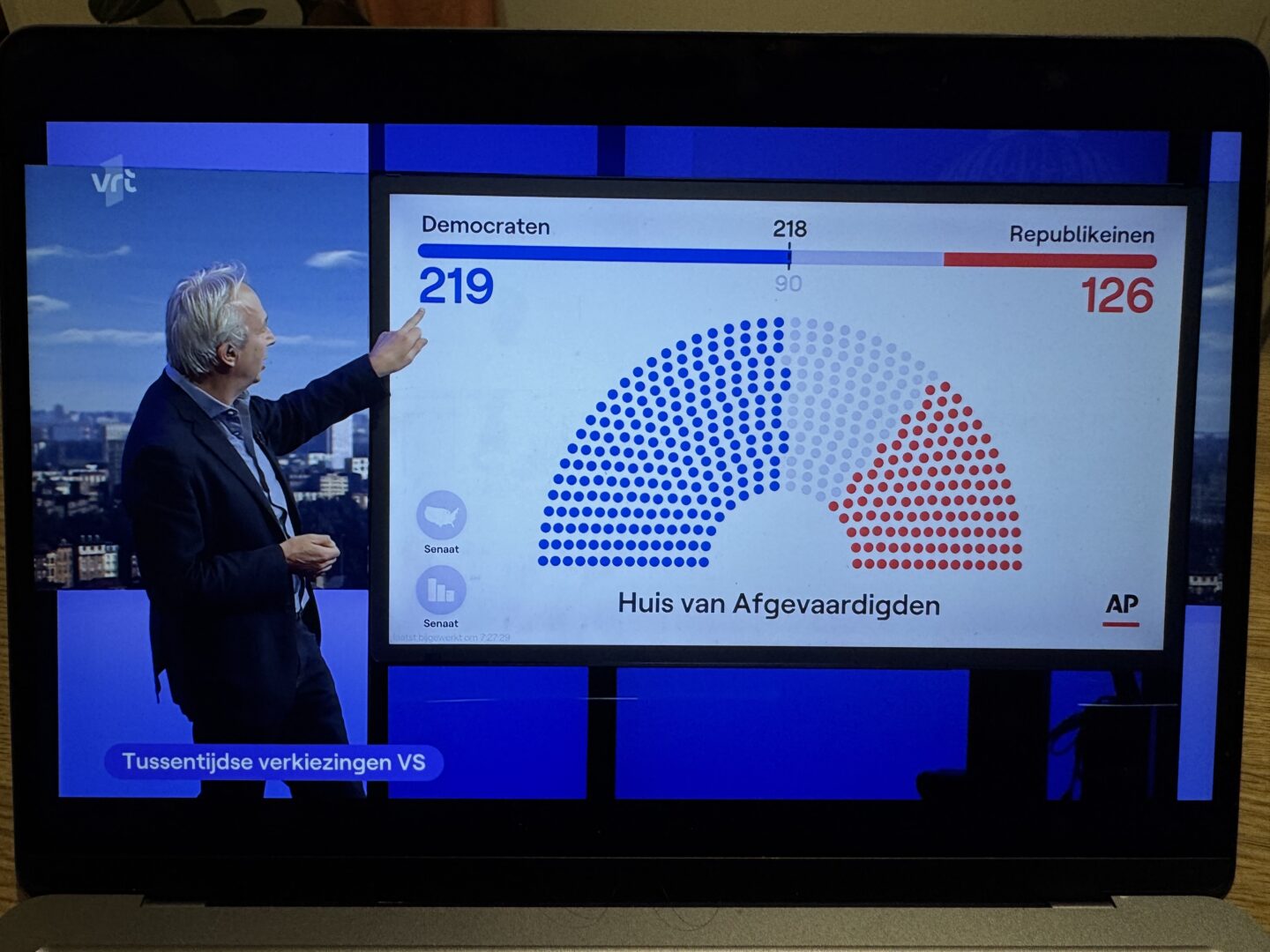
At 7:02 the House board read 206 for the Democrats, 124 for the Republicans and 105 still open. At 7:27 it read 219 to 126 with 90 open, which puts the Democrats one seat past the 218 line. That is where the House flipped on air. The final margin will take days, and I won’t guess at it.
What the other side said
Speaker Mike Johnson took the stage in front of a Team Johnson banner. Going by VRT’s Dutch subtitles, he framed the choice as leaving the country to left-wing radicals or fighting an insurgent socialist movement, and said the fight to restore America’s greatness was not over and that his side would win it. That is a campaign speech, not a concession speech. The next two years will be fought in that register.
Overnight, Trump posted a photo of a red cap with a single word on it, VETO, on Truth Social. VRT showed it with a time stamp of 11:40 pm on 3 November. It says plenty about how he intends to deal with a Democratic Congress.


Why it happened
The coverage points to prices, tariffs and the Iran war weighing on public sentiment through the autumn. Pew had Trump’s approval at 30 percent in a survey from 28 September to 4 October, the lowest of his second term. One polling analysis puts it in perspective: Trump’s net approval sits about eight points below where George W. Bush stood on election day 2006. That was the midterm that cost Bush’s party both chambers of Congress.
The $5,000 that never arrives
Trump promised every adult American citizen a $5,000 “dividend” if Republicans kept both the House and the Senate. Republicans did not, so nobody is getting that check. Nobody I found in the coverage says he ever specified what form the payment would take, and according to Yahoo Finance, it was at least the fourth time this term that he promised checks that never came to pass.
Here is my own speculation, and I want to be clear that it is speculation. Because he never said how the money would arrive, I would not be surprised if “$5,000” turned out to mean the value of his own Trump coin, which he could then talk up while enriching himself. No one has reported that this was the plan. It is simply what a promise this vague leaves room for.
What the new majority can and cannot do
A Democratic majority is not a supermajority. Ending a filibuster takes 60 votes. With 53 seats called and six open, the most Democrats could reach is 59, one short. A bill still needs Republican support or a rules change. The vice president only votes when the Senate is tied 50-50, so with 51 seats or more JD Vance never gets to cast a deciding vote. Overriding a veto needs two thirds of both chambers, which the Democrats will not have either.
A Supreme Court vacancy, on the other hand, needs only a simple majority in the Senate to confirm, so a Democratic Senate can now block or confirm a nominee. Any retirement would be a far bigger fight than it was last week.
“A still more glorious dawn awaits.” – Carl Sagan
Part two: The Road to 2028
Trump is limited by the Constitution to two terms, so with two years left and both chambers lost, calling him a lame duck is fair in everyday usage. He still has executive orders, tariffs, foreign policy and appointments, though confirmations now run through a Democratic Senate and the House can open oversight investigations.
Two presidents get named on nights like this one: Harry Truman and Richard Nixon. Truman lost both chambers in 1946, and the new Republican Congress passed the Taft-Hartley Act over his veto. He was written off, then ran against a “do-nothing Congress” and won re-election in 1948. Nixon’s story ended differently. Watergate forced him to resign in August 1974 after Republican leaders told him impeachment and removal were all but certain, and his party then lost 48 House seats that November.
Expect gridlock. A shutdown is a real risk only if the two sides cannot agree on funding, and Democrats will negotiate from a stronger position than before. Expect plenty of bills passed and vetoed too, because Democrats can campaign on the contrast heading into 2028. Which of the two stories this turns into depends on whom voters blame.
A fictional scenario
This is fiction, and I want to be clear about that. None of what follows has happened. It is one possible story, not a prediction.
Early 2027
In the first half of 2027, Democrats use their new House majority to open investigations into tariffs, the Iran war and the administration’s spending. Subpoenas go out and the White House refuses to comply. In the Senate, a Democratic majority that stops short of 60 cannot beat a filibuster, so almost no legislation passes. By summer, Congress passes only the bare minimum to keep the lights on.
Late 2027
Then comes the autumn. A funding fight shuts the government down, and Trump blames the Democrats while Republicans in swing seats quietly distance themselves. Prices are still high, and the $5,000 he promised stays a punchline at every town hall.
2028
In 2028, the story forks.
- In the Truman branch, Trump becomes a foil. He loses allies but not his base, and a Republican nominee has to decide whether to run with him or against him.
- In the Nixon branch, a scandal or a court ruling tips Republican senators against him, and the party spends the primary season trying to escape his shadow.
Either way, the 2028 candidates on both sides spend the year answering one question: what did the midterms teach us?
A bad midterm is not the end of the story. It is the start of a fight over who gets to write the next chapter.
“That’s all Folks!” – Porky Pig
Part three: Conclusion
I did not come to this night cold. I have been following American elections on this blog since the autumn of 2004. That month I was watching the debates between John Kerry and Bush and writing them up the same evening: my notes on the second debate, a count of the words each man used in it, the third debate a few days later, and, once it was over, a post called Four more years.
On election day 2006, the last time voters took both chambers from the president’s party in a midterm, I posted a short note on the American parliamentary elections. In 2008 I followed the primaries from Super Tuesday onwards, the first debate between Barack Obama and John McCain, the vice-presidential debate between Sarah Palin and Joe Biden, election day itself, and a night later the news that Obama was the new president.
In 2012 there was a guide to the race between Obama and Mitt Romney. In 2016 I asked in June how dangerous Donald Trump really was, wrote up the first debate between Trump and Hillary Clinton, posted three questions about the election a few days before the vote, and afterwards looked at the nationalist strategy of Steve Bannon. The first Trump term gave me an evaluation form for the new employee Donald J. Trump after seventeen days and two stars for season one of his presidency.
More recently came a piece asking who will be the Metternich of 2025, Patriarchal Panic, on reactionary machismo and radicalisation, and just yesterday a thought experiment on ostracism for midterms day.
Most of those are in Dutch, and the older ones read like they were written by someone with more naive enthusiasm and a much slower internet connection. I list them because a night like this one only makes sense against the nights before it. I studied history, I read far too much, I watch the debates live at hours when sensible people are asleep, and my about page admits to an inappropriate ambition for geopolitical analysis that I hope will not be outdated tomorrow.
Two years after that 2006 midterm, Obama won the White House. Midterms rarely settle anything. They set the terms of the argument. I’ll be watching the final AP numbers.
Sources: VRT NWS, Associated Press graphics as shown on VRT één, Pew Research Center, Political.org, Fifty Plus One, High Plains Public Radio, PBS NewsHour, Yahoo Finance, US Senate on cloture, US Senate on nominations, Quartz, The Overlooked Brief, and Wikipedia on the 22nd Amendment, the 80th Congress, Nixon’s impeachment process and the 2006 elections.